Noya Locksmiths Service Team
Local locksmith team
Aug 13, 2026 12 min read
If you have ever stood in the hallway of a pre-war Manhattan building, key in hand, staring at a big brass plate covering most of your door's edge, you are already acquainted with a mortise lock — you just may not have known what to call it. These beefy, built-into-the-door mechanisms are everywhere in New York City, from six-story walk-ups in Washington Heights to century-old brownstones in Park Slope, and for good reason: they were engineered for exactly the kind of heavy daily use a New York apartment demands.
But not every NYC door uses the same hardware, and knowing what you have matters — for security upgrades, rekeying, lockouts, and even just replacing a worn cylinder. This guide breaks down the two lock types you are most likely to encounter on your apartment door, explains how to tell them apart in thirty seconds flat, and covers what you need to know before calling a locksmith to service either one.
## What Is a Mortise Lock — and Why Does Your NYC Door Probably Have One?
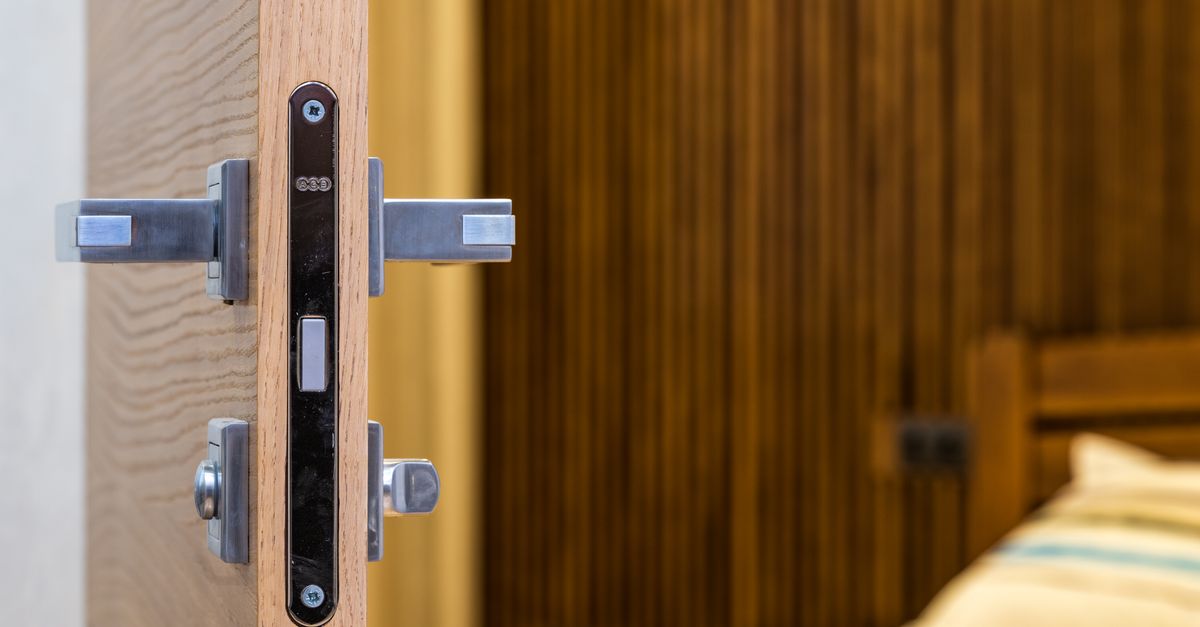
A mortise lock is a complete locking mechanism housed inside a rectangular metal pocket, or 'mortise,' that is cut directly into the body of the door. Unlike a simple bored cylindrical lock (the kind you see on most suburban front doors), a mortise lock set integrates multiple functions into one unit: a deadbolt, a spring latch, and sometimes a privacy thumb-turn, all controlled through a single internal chassis. That chassis sits flush inside the door, covered on the face by a long metal strike plate and on the surface by an escutcheon — that distinctive, elongated brass or chrome plate that runs vertically along the edge of the door. If your door has one of those tall plates with a keyhole, a thumb-turn, and maybe a button or lever, you have a mortise lock.
New York City's housing stock explains why these locks are so common here. Tens of thousands of apartment buildings were constructed between roughly 1890 and 1940, when mortise lock sets were the industry standard for any quality door. Buildings along the Grand Concourse in the Bronx, in Astoria, Queens, and across Brooklyn's older neighborhoods were fitted with mortise hardware from the factory, and much of that hardware is still in service today. Brands like Corbin Russwin mortise locks and Baldwin mortise locks became synonymous with institutional durability; a well-maintained Corbin Russwin mortise lock installed in 1950 can still function reliably today, which is part of why landlords never replaced them. The depth and complexity of the mortise lock mechanism also make it significantly harder to kick in or pry apart than a standard knob lock — a real advantage in a dense urban environment.
## Cylinder Lock Basics: The Rim Cylinder and the Bored-In Knob
The other major category you will encounter on New York doors is the cylinder-based lock, and this group actually covers a few distinct styles. The most common in NYC is the rim cylinder lock, sometimes called a rim lock or a Segal lock in local parlance. A rim cylinder lock mounts on the surface of the door rather than inside it; you will recognize it by a small, round cylinder on the outside and a rectangular metal case bolted to the inside face of the door. These are extremely common as secondary deadbolts on NYC apartment doors, often installed above or below the main mortise lock set. They are simple to rekey and replace, which is one reason tenants and landlords have added them over the decades.
The other cylinder variant is the familiar bored-in knob or lever lock — a round hole is drilled through the door, and a cylindrical cartridge is inserted. You see these on many interior doors, commercial office suites, and newer construction apartment buildings. They are the kind of door knob lock most people picture when they imagine a generic house key. On their own, door knob locks offer limited security because the latch mechanism can be vulnerable to forced entry; in NYC, they are almost always paired with at least one additional deadbolt. Understanding which category your lock falls into matters because the repair, rekeying, and replacement procedures — and the parts involved — are completely different for each type.
## How to Tell Which Lock You Have in 30 Seconds
Stand at your door and look at the edge — the narrow strip of door you see when the door is open. If you see a long faceplate (typically six to nine inches tall) with multiple bolt openings cut into it, you have a mortise lock. Now look at the surface of the door itself: a mortise installation will show an escutcheon plate rather than a round rose (the circular trim piece behind a knob). The keyway will sit within that long plate, not in a separate cylinder that sticks out on its own. Finally, the mortise lock cylinder — the plug you insert your key into — will be removable as a separate component, typically held in place by a small set screw on the edge of the door. Knowing this is useful because a skilled locksmith can often replace just the mortise lock cylinder without touching the rest of the mechanism, saving time and cost.
If your door has a compact, circular case screwed onto the inside surface with a key cylinder poking through the door from outside, that is a rim cylinder lock. If it has a round knob or lever with a key slot in the center, it is a bored cylindrical lock. Many NYC apartment doors actually have all three: a mortise lock set as the primary latch and deadbolt, a rim cylinder lock as a secondary deadbolt, and sometimes a door knob lock on the interior side. If you are ever unsure — especially before requesting service — a quick photo of the door edge and the interior hardware will tell any experienced locksmith everything they need to know before they arrive.
## Security Upgrades, Rekeying, and When to Call a Commercial Locksmith
Whether you have just moved into a new apartment, lost a key, or noticed your lock is stiff and grinding, the right next step depends on your lock type. For a mortise lock, rekeying means removing the mortise lock cylinder, disassembling the plug, and replacing the pins — a precise job that requires the right tools and familiarity with the specific brand and model. A Corbin Russwin mortise lock and a Baldwin mortise lock, for example, use different cylinder formats and keyways, so parts are not interchangeable. For a rim cylinder lock, rekeying is generally more straightforward, but you still want a professional to confirm the cylinder grade and ensure the new key profile works with any existing locks on the door.
Security upgrades are worth discussing with your locksmith, especially if you are in a building with a shared hallway. Upgrading to a high-security mortise lock cylinder — one with anti-pick, anti-drill, and anti-bump features — is often the most targeted improvement you can make without replacing the entire mortise lock set exterior door hardware, which in older buildings can require carpentry work to resize the mortise pocket. If you manage a multi-unit building or a retail space, a commercial locksmith can assess a master-key system, restricted keyways, and access control options that tie into existing mortise infrastructure. Noya Locksmiths handles everything from single apartment rekeying to full commercial locksmith projects across the five boroughs — call (646) 863-8023 any time and we will assess your specific door and hardware before recommending anything.
## Lockouts, Emergency Locksmith Calls, and What Affects Your Quote
Getting locked out of an NYC apartment at midnight is a rite of passage nobody wants. If it happens, the first practical step is to check whether a neighbor, super, or building management has a spare key — many NYC leases actually require landlords to maintain one. Check if any other entry point to your unit is accessible, and verify that the door is actually locked and not simply stuck due to humidity swelling the door frame (this is surprisingly common in older NYC buildings during summer). If none of that resolves the situation, calling an emergency locksmith is the right move.
When you call Noya Locksmiths, a trained technician will ask you a few quick questions — your address, the lock type if you know it, and whether you are the tenant or owner — and will confirm an exact up-front price before any work begins. The factors that shape a final quote include the lock type and brand (a mortise lock set requires more specialized work than a simple knob lock), the time of day (overnight and holiday calls involve different logistics), travel distance to your location, and whether any parts need to be sourced or replaced on the spot. There are no hidden fees added after the job. How much does an emergency locksmith cost near me? That depends on all the variables above — but you will always know the number before we start. We are a 24-hour emergency locksmith team, which means whether it is 3 a.m. on a Tuesday or a Sunday afternoon during a blizzard, someone answers when you call (646) 863-8023.
## 25 Locksmith Services Noya Locksmiths Provides Across NYC
Noya Locksmiths is a fully mobile, around-the-clock operation serving Manhattan, Brooklyn, Queens, the Bronx, and Staten Island. Here is a specific look at what our experienced team handles every day: mortise lock installation and replacement, mortise lock cylinder removal and rekeying, rim cylinder lock installation and replacement, door knob lock replacement and repair, residential apartment lockout response, house and condo lockout service, car lockout service for all makes and models, broken key extraction from mortise and cylinder locks, high-security cylinder upgrades for existing mortise lock sets, master-key system design and implementation, commercial locksmith services for offices and retail spaces, storefront gate lock repair and replacement, mailbox lock replacement, intercom-integrated door lock servicing, lock lubrication and adjustment for sticking or grinding mechanisms, door frame and strike plate reinforcement, ANSI-graded deadbolt installation, smart lock and electronic keypad installation, access control system installation for commercial properties, key duplication for standard and restricted keyways, transponder key programming and car key replacement, ignition lock cylinder repair and replacement, motorcycle lock service, safe opening and combination changes, and post-break-in lock replacement and door security assessment.
Every one of these services is performed by trained, experienced locksmiths who carry the tools and common parts needed for NYC's specific door hardware landscape — including the mortise lock sets and rim cylinders that dominate the city's pre-war building stock. We are insured, and we verify caller identity and proof of occupancy before performing any residential lockout service, keeping your building and neighbors safe in the process.
Frequently asked questions
How do I find a legit locksmith in NYC?+
Start by looking for a locksmith with a verifiable local phone number, a physical service area they can describe specifically, and a clear policy of providing a confirmed price before starting work. Ask whether they will verify your identity as the tenant or owner before opening the door — any trustworthy locksmith will do this. Be cautious of listings with no reviews, prices that seem implausibly low (a sign of bait-and-switch tactics), or dispatchers who cannot tell you which neighborhood the technician is coming from. Noya Locksmiths is a genuine NYC-based mobile team; when you call (646) 863-8023, you reach our own staff, not a call center, and we confirm everything up front before a technician is dispatched.
How much does a NYC locksmith cost, and is there a call-out fee?+
What is a locksmith call-out fee? Some services charge a flat fee just for arriving, separate from the labor and parts cost. At Noya Locksmiths, we give you a single confirmed price before any work begins — it accounts for travel, labor, the type of lock being serviced, the time of day, and any parts required. How much is the average locksmith charge in NYC? It varies meaningfully depending on whether the job involves a basic door knob lock, a mortise lock cylinder swap, a car lockout, or a full commercial locksmith installation. You will always know your exact number before we touch anything.
Can a mortise lock be rekeyed without replacing the whole lock set?+
In most cases, yes. The mortise lock cylinder is a separate, removable component held in place by a set screw on the door edge. A skilled locksmith can extract that cylinder, repin it to a new key, and reinstall it — leaving the internal mortise chassis, latch, and deadbolt entirely intact. This is the most common scenario after a move-in or a lost key. The exception is when the cylinder is damaged, corroded, or a very outdated format for which replacement pins are no longer available; in that case, swapping in a new high-security cylinder of the same footprint is often the better long-term solution.
What should I do if I am locked out of my NYC apartment in the middle of the night?+
First, check whether your building superintendent or a trusted neighbor has a spare key — many NYC buildings have this arrangement. See if any other entry point to your unit is accessible and safe. If your door feels stuck rather than locked, humidity-swollen frames are common in older NYC buildings and sometimes just need the door pushed firmly while the knob is turned. If none of that works, call an emergency locksmith. Noya Locksmiths operates 24 hours a day, seven days a week, including holidays. We respond across all five boroughs, confirm your ownership or occupancy before opening the door, and give you a clear price before starting. Reach us any time at (646) 863-8023.